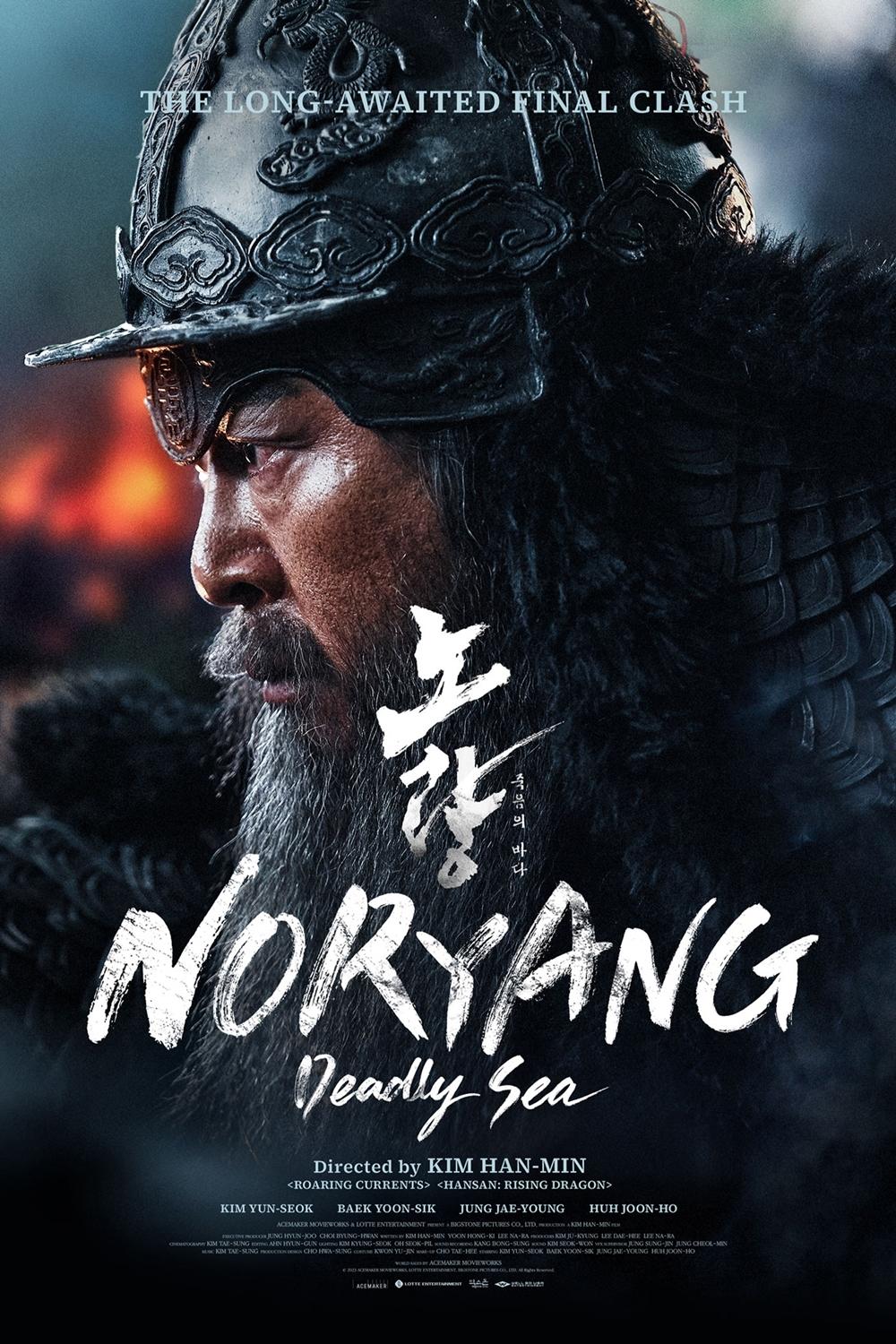
It is the third film about the admiral, again with a new cast.
The first two films are about underdogs winning against invaders, but here, from the very beginning we know that the invaders just wanted to leave, and the admiral just wants something akin a genocide. And accidentally helps the bad(er?) guy, or at least that's what implied. The film should've explained why he should not let the japs go clearer. Because in plain text the beginning of the film is framed as the nihonese guy wanting to save a kid and the admiral wanting for more people to die in a war that is already over. Once again these movies do not work by themselves. You watch one and think, "well that's some hollywood fantasy". But then you read up and understand that the naval battles scenes were actually plausible and awesome. Nay if you hindsight about it - they are borderline inevitable. Why do you have to do a homework to watch a movie? After doing some superficial research for this filmi saw at least some possible reasons for these decisions, none of which are in the film.
After a whole hour of meandering and weak drama, the awesome finally begins. Besides the two geobukseons, which soon are sank, they brought hwachas. There are some cool manoeuvres and in general most of the naval battle scenes are cool. There're a couple of awesome shots. There are scenes of people talking by writing hanzi which is cool. The whole region used hanzi but spoke different languages, so they could communicate through hieroglyphics but not by talking.
Yet most of the drama scenes are actively not good and drag this down. The actors playing non-korean have very unconvincing hard accents, so much so the speech doesn't even resemble the nationalities in its cadence. The flashbacks are unfitting, and often very unnecessary. Like they show scenes which you saw five minutes ago. And then there's, like, flashbacks to the previous movies, i think, but i don't remember who these people are supposed to be, and they all are wearing military uniforms.
The post credits scene talks about attacking nihon so that the war actually ends. But that the war did end. And right before the film has started. And the besieged dude even got what he wanted - he run away. Or is this a ressentiment, that not attacking nihon in 1600s then led to the later occupation of the peninsula by a different nihonese government in 1900s? That's petty.
And no other interpretations are offered by the film, should've explain the situation better.
عرض المزيد